Agentic AI Execution Layer: How Agentic Systems Connect Strategy, Engineering, and Execution
Your strategy deck says one thing. Your engineering roadmap ships another. Both were approved in the same quarter, and neither team did anything wrong. Most enterprise AI strategies still live in slide decks. The gap is usually treated as a communication problem, but it is really a systems problem: nothing has connected boardroom decisions to…

Your strategy deck says one thing. Your engineering roadmap ships another. Both were approved in the same quarter, and neither team did anything wrong.
Most enterprise AI strategies still live in slide decks. The gap is usually treated as a communication problem, but it is really a systems problem: nothing has connected boardroom decisions to the code running in production.
An agentic AI execution layer is starting to close that gap. It turns strategic intent into executable workflows across planning, engineering, and delivery, without a manual handoff at every step. Execution improves once the systems doing the planning and the systems doing the building share the same operational fabric, not just the same quarterly review.
The Strategy Execution Gap That Enterprise AI Investment Has Not Closed
Enterprise leaders have never had more confidence in AI and less proof that it pays off. Boards approve roadmaps, budgets expand, and pilots multiply, yet the distance between an approved strategy and a shipped capability keeps growing.
The cause is structural, not motivational. Strategy gets set by one group and software gets built by another, and the tools connecting them were designed for reporting, not execution. Buying more AI does not close the enterprise strategy execution gap on its own.
What the Fastest Companies Do Differently
A 2025 BCG analysis of AI investment outcomes found that the fastest-moving companies treat AI as a transformation program with tracked value, not a series of disconnected tools bolted onto existing workflows.
That distinction, managing AI as an enterprise AI operating model rather than a stack of point solutions, is exactly where agentic systems change the equation. Instead of a strategy document sitting apart from an engineering backlog, agents can read priorities, translate them into scoped work, and route that work through build and validation, with a persistent record of intent behind every action.
Xccelera has tracked this pattern across enterprise clients making the move to agentic systems. The limiting factor was never ambition. It was the missing layer between deciding something matters and building it.
Agentic Systems as the Execution Layer Between Strategy and Engineering
Strategy documents describe outcomes. Engineering backlogs describe tasks. Somewhere in between, someone has always translated one into the other by hand, usually a product manager working from memory and a handful of meetings.
Agentic systems replace that manual translation with a structured layer that holds context across both domains at once. An agent orchestrating a workflow does not need a quarterly briefing to know what changed upstream. It reads updated priorities directly and adjusts the engineering plan it is executing. That is a fundamentally different operating model from dashboards that only report progress after the fact.
Where the Translation Actually Happens
Here is how each layer of the organization changes when an agentic connection replaces the traditional handoff:
- Strategy: Quarterly plans reviewed manually and passed downstream become priorities encoded as machine-readable objectives that agents can act on directly.
- Engineering: Backlog grooming based on secondhand requirements becomes agents generating and scoping work straight from strategic input.
- Execution: Status reported after the work is done becomes continuous execution with real-time visibility into progress.
None of this removes human judgment. It removes the lag between a decision being made and a system acting on it, which is where most strategy execution alignment breaks down across the software development lifecycle (SDLC) today.
Multi-Agent Coordination Across Business, Engineering, and Operations
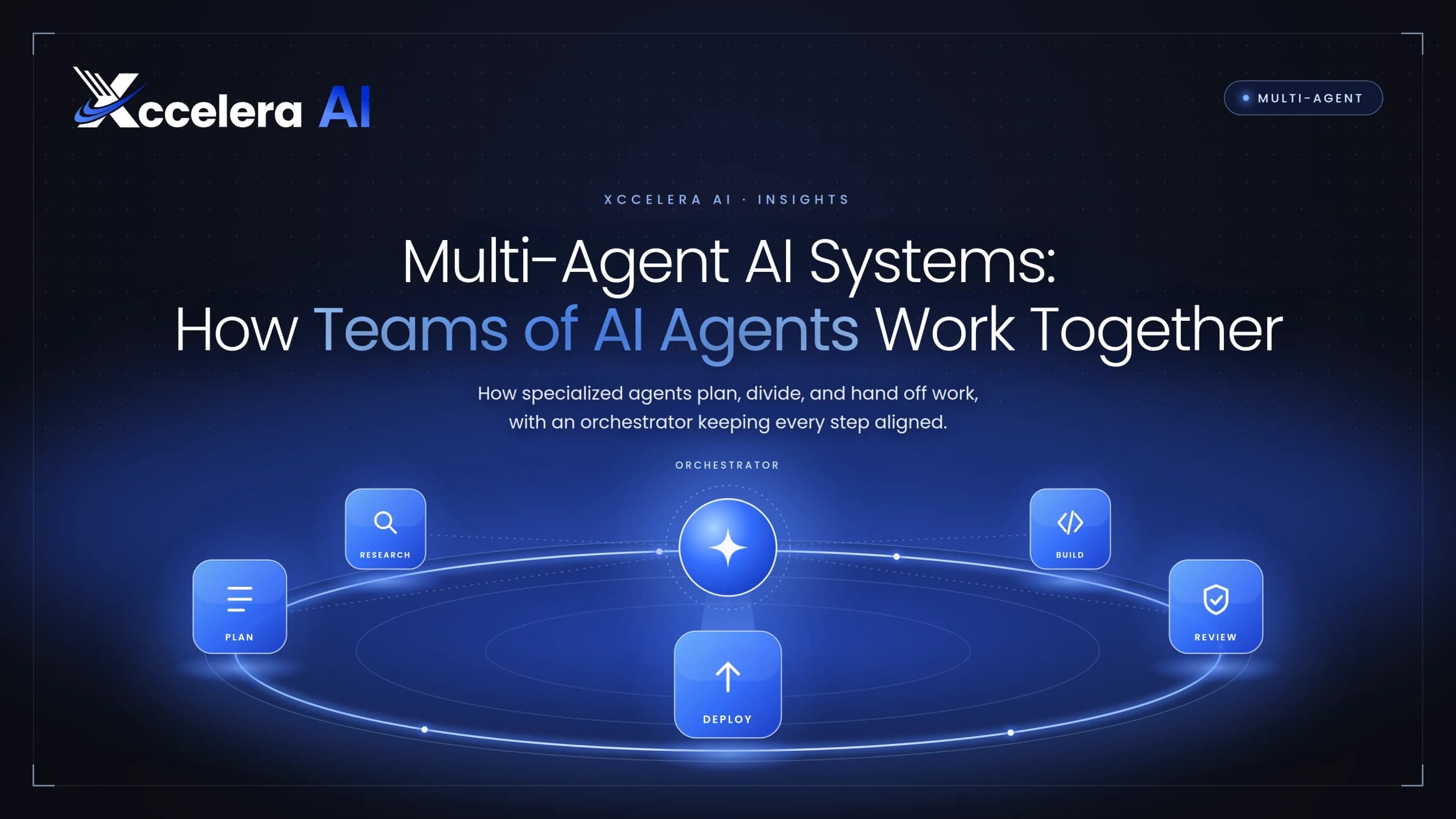
Connecting strategy to execution rarely means one agent doing everything end to end. It usually takes several specialized, cross-functional AI agents, each owning a distinct function and working from shared context so their outputs stay aligned.
One agent might monitor business priorities and translate them into technical requirements. Another might scope and generate the underlying build. A third might validate outputs against quality or compliance standards before anything reaches production.
AI agent orchestration across that many moving parts, without losing control, is the central design challenge enterprises face in 2026. It is why more organizations are investing in a control plane built for coordinating multiple agents, rather than stitching point tools together after the fact.
What Effective Coordination Requires
- A common context layer so agents are not working from stale or conflicting information
- Defined ownership boundaries so no two agents duplicate or override each other’s work
- Escalation paths that route ambiguous decisions to a human reviewer instead of guessing
- Audit visibility into which agent took which action, and why, at every step
Autonomous workflows only hold together when these conditions are designed in from the start, not patched in after the first failure.
Governance and Oversight for Autonomous Strategy-to-Execution Systems
Autonomous systems raise the stakes on governance in a way assistive AI tools never did. When an agent can move directly from a business objective to a deployed change, the review checkpoints that used to happen naturally between departments have to be designed back in on purpose.
In practice, AI governance and oversight means three things: role-based access controls, approval gates before high-impact actions, and a permanent record of what each agent decided and why. That is not compliance overhead. It is the mechanism that lets leadership trust the system enough to give it real authority.
The organizations pulling ahead are not the ones moving fastest. They are the ones that can explain, after the fact, exactly why an autonomous system did what it did. That explainability is becoming a board-level expectation rather than an engineering afterthought, particularly in regulated industries where an unexplainable action is treated the same as an unauthorized one.
Practical Barriers to Connecting Strategy and Agentic Execution
Even when the technology works, enterprises hit predictable barriers. None of them is a technology limitation in the traditional sense. It is organizational debt that predates the AI investment and has to be paid down before that investment pays off. A governance framework a board will actually approve is often the first artifact needed before agentic execution can scale past a pilot.
Three Barriers to Resolve First
- Siloed or unstructured data that agents cannot reliably interpret without significant cleanup
- Unclear decision rights between strategy owners, engineering leads, and the agents acting on their behalf
- Legacy systems that lack the interfaces agents need to execute safely at scale
Resolve these three before adding more agents to the mix, not after.
Xccelera’s Role in Closing the Strategy-to-Execution Gap
The gap between strategy and execution was never really about ambition. It was about the absence of a system that could carry intent from a boardroom decision to a production deployment without losing fidelity. Enterprises that close it treat agentic systems as connective infrastructure, not as isolated automations layered on an unchanged organization.
Xccelera works with enterprise teams on exactly this connective layer, helping translate strategic priorities into governed, auditable engineering execution across functions that used to operate in isolation. The goal is not to remove human decision-making. It is to make sure the systems doing the work can act on those decisions directly, with the oversight leadership needs to trust the outcome and the speed the business requires.
Conclusion: Build the Layer Between Decision and Delivery
Ambition is not what separates enterprises that ship strategy from those that stall. A well-governed agentic AI execution layer gives strategic intent a direct, auditable path into production, and that is what turns AI investment into AI impact.